


Industrial manufacturing facilities, automated assembly lines, and high-capacity grid infrastructures operate under intense workloads. In these demanding environments, system electrical architecture cannot afford unexpected power cuts, thermal failure, or electrical degradation. Choosing an unverified interconnect option or an underrated terminal component when setting up large equipment leads to significant losses due to unscheduled factory downtime. For original equipment manufacturers (OEMs), factory procurement engineers, and system designers, selecting a heavy-duty high current connector is the single most critical factor in securing operational uptime and maximizing electrical safety.
Modern factory systems require rapid energy distribution, large electrical capacities, and absolute physical resilience. From grid-scale commercial battery storage banks to automated assembly line machinery, electrical current loads generate considerable heat. If an interconnect interface possesses poor material architecture, it will trigger an immediate thermal cascade. This technical blueprint delivers an exhaustive engineering breakdown of heavy-duty power distribution contacts, high current waterproof connector standards, core electrical parameters, and compliance criteria.
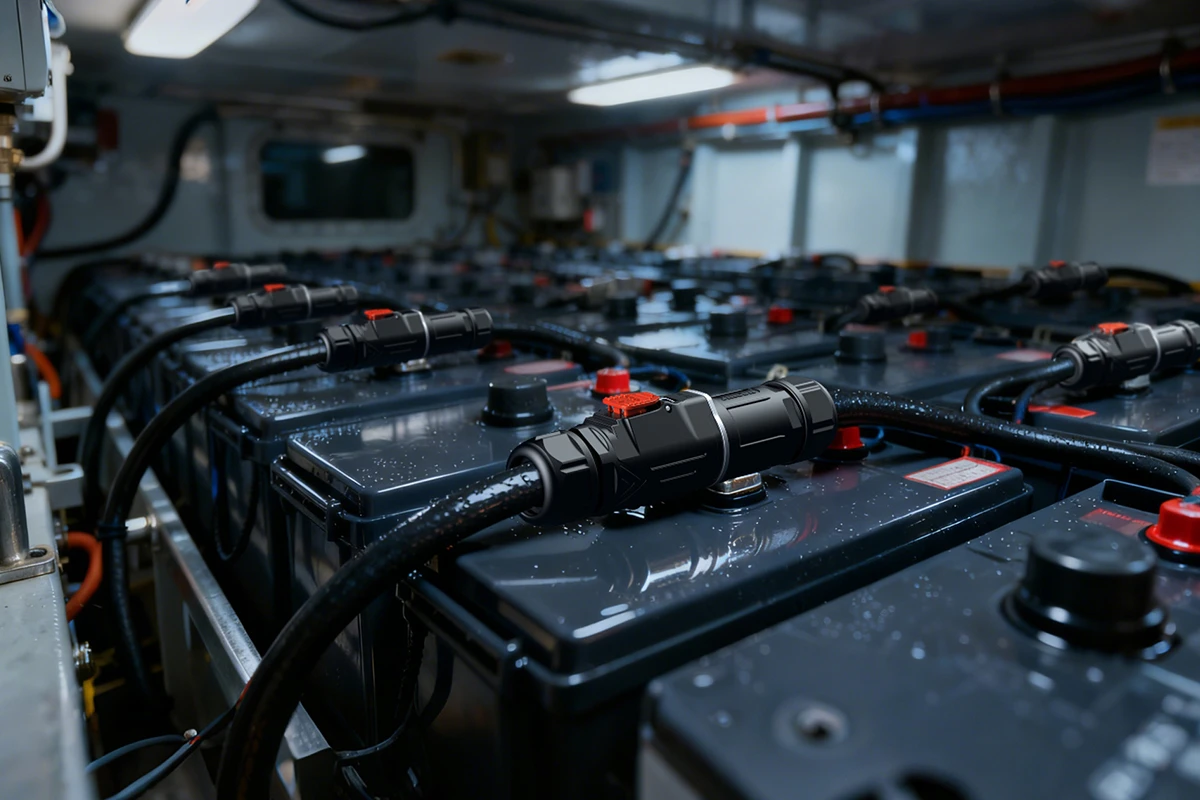
Primary Electrical Parameters of High Current Connections
When evaluating high-capacity electrical interfaces for industrial machinery, electrical engineers must look beyond basic dimensions. You must evaluate the exact physical laws governing power transmission efficiency. A mismatch between system current delivery and connector capabilities will cause catastrophic component melting, irreversible dielectric breakdown, or massive voltage attenuation.
Current Rating (Rated Current) Boundaries
The rated current defines the absolute maximum continuous electrical load that a terminal can carry over an extended operational duration without surpassing its designated material temperature limit.
-
50A to 80A loads: Generally utilized for compact automated machining tools, variable frequency drives, and localized sub-distribution panels.
-
120A connector options: Universally deployed for standard commercial battery banks, decentralized grid setups, and high-speed EV charging connector assemblies.
-
200A connector installations and higher: Essential for heavy utility-scale storage systems, large industrial kilns, and centralized heavy-duty power connector grids.
-
The Engineering Risk: Running current loads past the manufacturer's designated benchmark causes rapid thermal degradation of the outer insulating polymer, leading to immediate short circuits.
Voltage Rating (Rated Voltage) Layouts
The rated voltage dictates the maximum continuous operating potential a connector housing can safely isolate without encountering spark-over or creeping current breakdown.
-
In industrial environments, standard power delivery grids typically rely on 300V to 600V limits.
-
Advanced renewable infrastructures—such as utility-scale commercial installations and multi-megawatt configurations—frequently push operations to 1000V levels.
-
High dielectric spacing and precise physical terminal insulation routing are necessary to ensure complete system safety under maximum voltage stress.
The Impact of Contact Resistance on Power Efficiency
Contact resistance represents the micro-level electrical friction present at the precise intersection where male and female terminal pins engage. It directly governs power transmission efficiency and heat accumulation within the plug body.
Heat Generation (Watts) = I² × R(contact)
-
Resistance values <= 5mΩ: Represents top-tier industrial performance, drastically minimizing structural energy loss and preventing localized overheating.
-
Resistance values between 5mΩ and 10mΩ: Acceptable for general-purpose applications, but less optimal for high-amperage, continuous duty cycles.
-
Resistance values exceeding 10mΩ: Deemed poor for heavy manufacturing, presenting an extreme risk of sudden thermal failure.
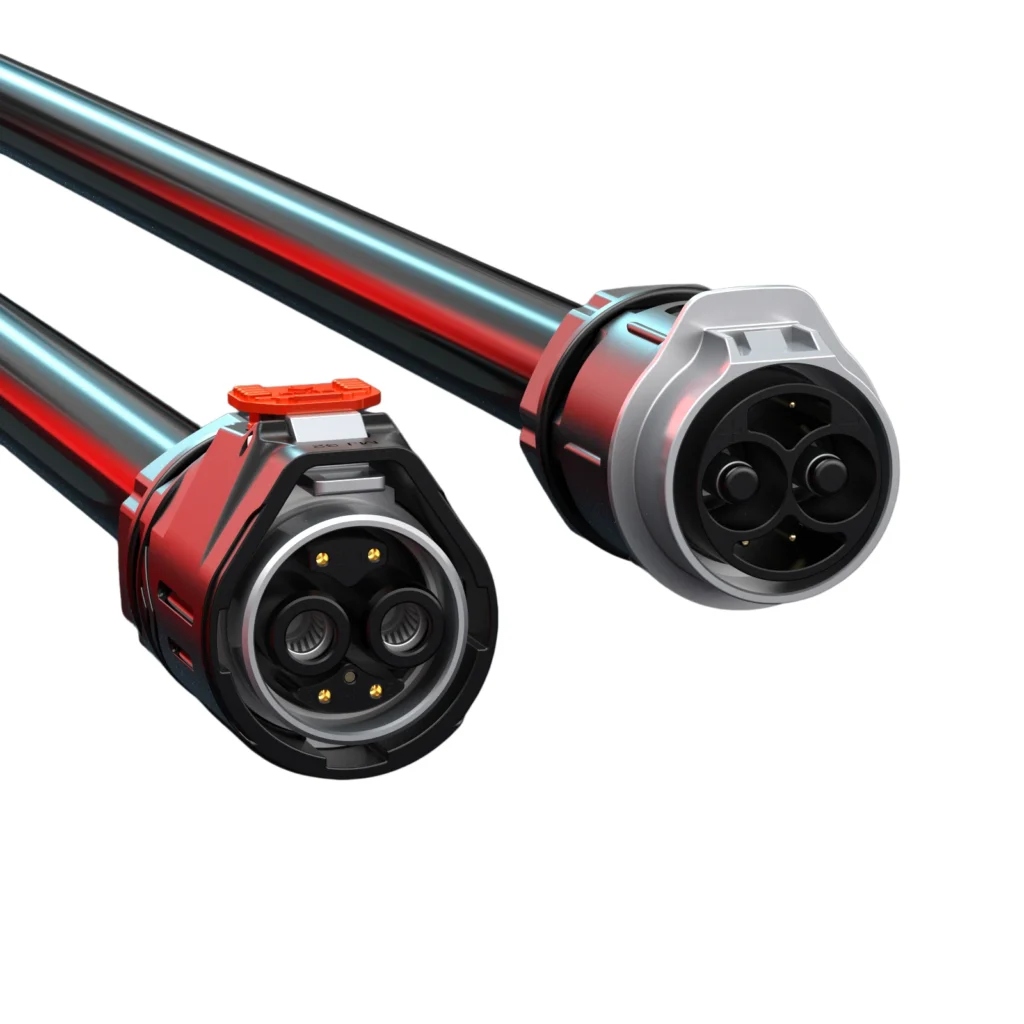
MJ32 2+5 Pin Hybrid Waterproof Connector 120A for BMS Signal Transmission
120A hybrid waterproof connector with power and multi-signal transmission, designed for battery management systems and industrial controls.
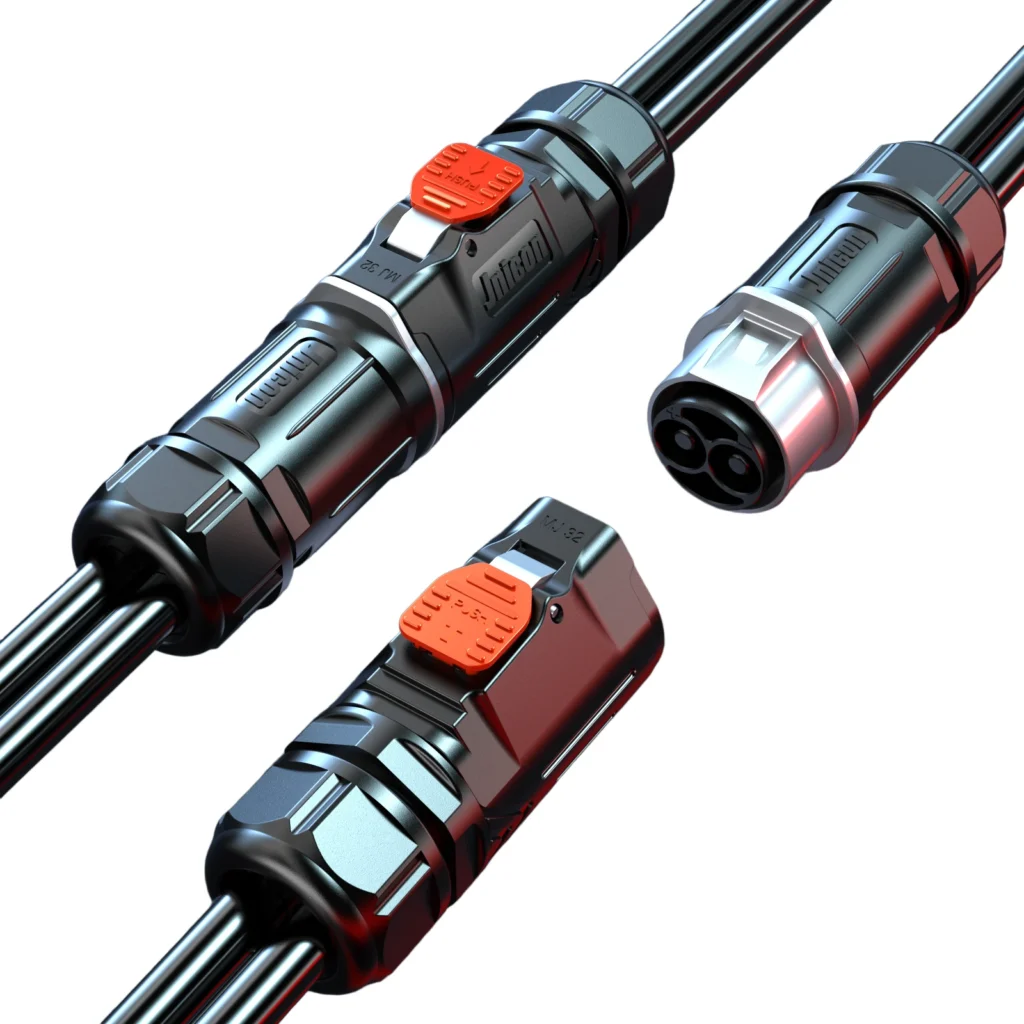
MJ32 2-Pin Waterproof Connector 120A Quick Lock for EV Charging
120A quick-lock waterproof connector for EV charging and energy storage, with IP67 protection and silver-plated contacts.
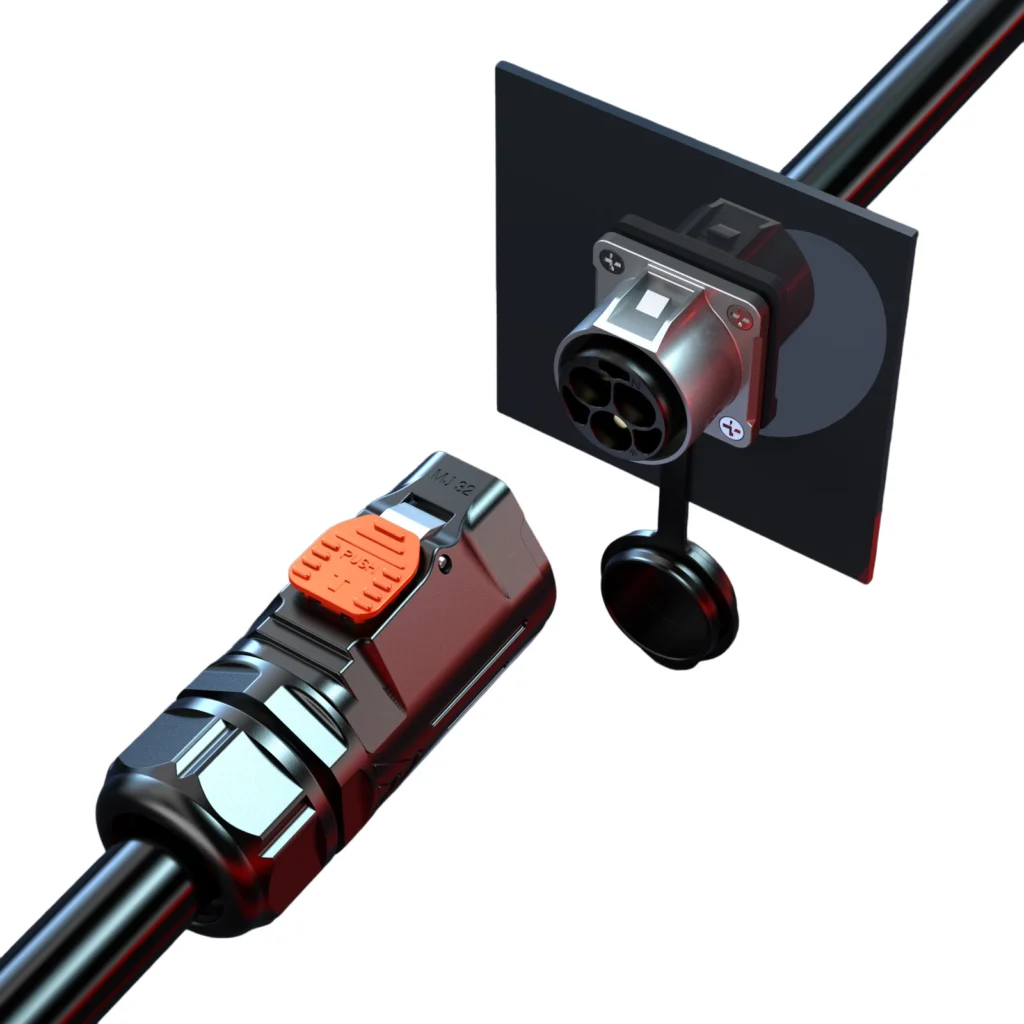
MJ32 3-Pin Waterproof Connector 80A Quick Lock for Energy Storage
80A quick-lock waterproof connector for energy storage and industrial power, with IP67 protection and reliable power transmission.
Advanced Metallurgy: The Value of Silver Plated Copper Pins
At the core of every reliable heavy-duty electrical interface lies its contact pins. For low-voltage signal transmission, thin gold plating is typically preferred due to its resistance to oxidation. However, for massive power transmission, specialized copper alloy pins are required.
Advanced high-capacity connectors utilize a silver plated copper pin infrastructure due to the unique properties of silver:
-
Unmatched Electrical Conductivity: Silver delivers the highest electrical and thermal conductivity of any element on earth, ensuring smooth electron flow with minimal resistive friction.
-
Superior Thermal Control: Low internal resistance minimizes heat generation. Any heat that is generated is rapidly dissipated through the pin core, maintaining safe operating temperatures even during peak load cycles.
-
Self-Healing Oxide Properties: Unlike copper oxide, which forms a highly resistive barrier, silver oxide remains electrically conductive. This maintains low contact resistance throughout thousands of mating cycles.
-
Resilience to Extreme Environments: Combining high-purity copper cores with thick silver plating allows these pins to easily endure extreme factory operating temperatures ranging from -40°C to +125°C.
Selecting Mechanical Locking Topologies for High Vibration
Industrial production lines generate constant, multi-axis mechanical vibrations. Over time, these low-frequency harmonics and sudden impacts can shake standard friction-fit connections loose. This creates micro-arcing gaps that destroy terminal pins. A high-capacity power interface must feature a mechanical locking system that ensures solid contact compaction.
Screw Lock Mechanics: Maximum Retention Security
The traditional screw lock mechanism utilizes a threaded coupling nut to physically secure the mated plug parts together.
-
Engineering Advantages: Delivers exceptional axial pull resistance and complete immunity to heavy physical jarring or pulling.
-
Best Application Profile: Ideal for permanent or semi-permanent heavy machinery connections where cables are rarely disconnected.
-
Disadvantages: Slower manual assembly turnaround; requires specific care to avoid thread damage or over-torqueing.
Bayonet Lock Design: Rapid Quarter-Turn Coupling
The bayonet lock utilizes a set of internal pins that slide into matching ramps on the receptacle collar, securing with a quick quarter-turn rotation.
-
Engineering Advantages: Provides rapid, highly visible confirmation of positive engagement without requiring specialized calibration tools.
-
Best Application Profile: Excellent for mobile containerized power systems and flexible modular machinery layouts.
Push Lock and Quick Lock Systems: Tool-Free Labor Efficiency
Modern push lock and quick lock topologies secure automatically upon linear insertion, often providing a distinct tactile and audible "click" confirmation.
-
Engineering Advantages: Drastically reduces manual installation times; completely removes human error regarding tool adjustments.
-
Best Application Profile: Perfect for tight equipment spaces where wrench access is restricted, such as densely packed control enclosures.
Industry Applications: Energy Storage and Automated Production
Heavy manufacturing requires specialized connection designs tailored to the specific electrical profiles, environmental stresses, and regulatory requirements of each application.

New Energy & Energy Storage
Professional welding solution for industrial applications.
Explore Solutions
Harsh Environments: High Current Waterproof Connector Architecture
When a high-capacity power connection is deployed outdoors or on washdown-heavy production floors, moisture is a constant hazard. Water ingress into a high-voltage interface causes catastrophic short-circuit paths, rapid galvanic pin corrosion, and explosive arcing events. True environmental protection requires a verified high current waterproof connector architecture.
Choosing the proper ingress rating determines long-term field survivability:
-
IP67 Sealing Level: Certified to withstand temporary liquid submersion up to 1 meter for 30 minutes maximum. It is ideal for outdoor industrial equipment exposed to rain, puddles, or splashing washdown liquids.
-
IP68 Sealing Level: Engineered to endure prolonged, continuous underwater submersion under defined pressure boundaries. This configuration is mandatory for deep-well pump systems, marine equipment, and subsea industrial structures.
-
The Capillary Defense: High-performance waterproof housings feature internal fluorosilicone compression rings and precision low-pressure overmolding. This creates a tight physical barrier that prevents negative pressure from siphoning moisture past the wire jacket.
Sourcing Value: The Advantage of Turnkey Custom Cable Assemblies
For global procurement managers and heavy factory operators, buying a standalone power plug component is only half the solution. Requiring on-site technicians to manually strip, crimp, and assemble thick power wires by hand introduces substantial operational risk. Irregular manual crimping tools create hidden internal air pockets that cause localized resistance spikes and fire hazards.
Specifying a factory-built custom cable assembly directly from the manufacturer provides concrete operational benefits:
-
Gas-Tight Automated Compaction: Factory production lines utilize calibrated pneumatic crimping systems to achieve optimal deformation on copper wire strands. This eliminates high resistance points and guarantees maximum mechanical pull-out strength.
-
Hermetic Bond Integrity: Low-pressure overmolding infuses molten polymer directly into the plug rear cavity and over the cable jacket. This creates a single structural component that completely blocks liquid ingress.
-
Pre-Tested Reliability: Every finished custom cable harness undergoes automated high-voltage isolation tests and contact continuity validation before leaving the factory floor, ensuring zero-defect installation.
Global Compliance: Why UL and TUV Certifications Matter
When top-tier supply chains choose an interconnect partner for a major factory deployment, regulatory compliance certificates are mandatory requirements. Uncertified components expose your operation to severe liabilities, insulation breakdown risks, and immediate insurance policy cancellations.
UL Certification (Underwriters Laboratories)
A UL certified component undergoes rigorous verification against strict North American safety standards. Testing evaluates electrical insulation integrity, temperature tracking behavior under maximum load, and structural flame-retardant performance. This guarantees the housing material will not support active ignition if an internal overload occurs.
TUV Certification
A TUV certified component confirms adherence to European safety benchmarks and strict functional engineering tolerances. This certification independently verifies that the manufacturer's specified current load thresholds, voltage ratings, and IP waterproof ratings are fully achieved under realistic industrial stress testing.
Standardizing on certified connectivity hardware protects your equipment assets, streamlines global customs clearance, and ensures compliance with international grid connection audits.
Technical Engineering Performance Matrix
This reference table outlines specific engineering criteria across different high-capacity product categories to streamline your component selection process:
| Connector Configuration | Rated Current Scope | Rated Voltage Capacity | Contact Resistance | Locking Mechanical System | Target Factory Application |
| MJ Series Power Line | 80A to 120A | Up to 600V AC/DC | <= 5mΩ Maximum | Proprietary Quick Lock | AGV Fleets, Automated Assembly |
| M Series Circular | 50A to 80A | Up to 500V AC/DC | <= 5mΩ Maximum | Secure Screw / Bayonet | Heavy Controls, Process Machines |
| Energy Storage Block | 120A to 200A+ | Up to 1000V DC | <= 5mΩ Maximum | Touchproof Safety Quick Lock | Grid BESS, Hybrid Solar Inverters |
| Hybrid Power/Signal | Tailored per pin array | Multi-tier voltage layout | <= 5mΩ Maximum | Linear Push Lock / Snap-In | Robotics Controls, Smart Tooling |
| Custom Cable Assembly | Fully customized matching spec | Fully customized matching spec | <= 5mΩ Maximum |
Frequently Asked Questions (FAQ)
Conclusion: Minimize Factory Downtime with Teleconix
Optimizing high-capacity power infrastructure requires balancing robust mechanical locks, high-purity contact metallurgy, reliable weatherproofing, and global safety certifications. Settling for unverified, low-grade connectivity hardware introduces severe failure risks to your production environment.
As an R&D-driven leader in heavy industrial connectivity, Teleconix manufactures high-performance solutions engineered to keep your factory running safely. Our modern facility features a dedicated team of 55+ senior R&D engineers, a global portfolio of nearly 300 patents, and production lines that deliver premium UL certified and TUV certified solutions at factory-direct pricing. From rugged M series circular layouts to high-capacity energy storage interfaces and turnkey custom overmolded cable assemblies, we engineer every component to protect your operations.
Rust-proof your system infrastructure and eliminate power failure risks today. Contact our engineering support team directly to submit an operational inquiry, request technical blueprints, or secure free product samples for your next deployment.